5 Weight Loss Myths That Kept Me Stuck for Years

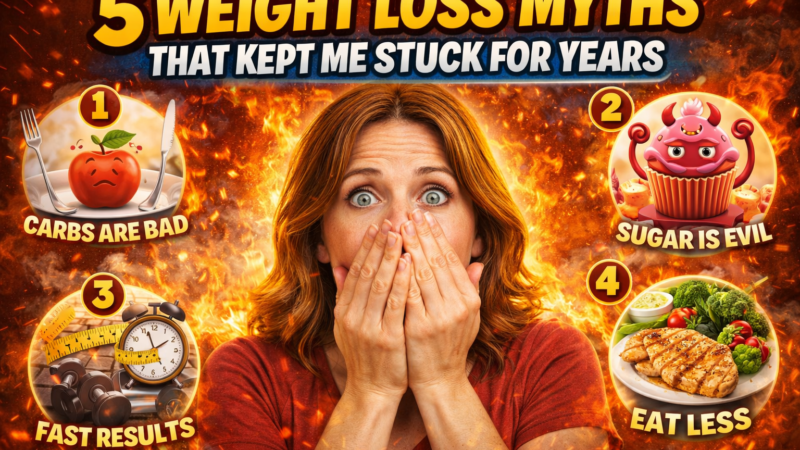
I spent the better part of my twenties trying to lose weight. And for most of that time, I failed. Not because I lacked willpower. Not because I did not want it badly enough. But because almost everything I believed about weight loss was wrong.
I believed things I had picked up from magazine covers, Instagram influencers, gym bros, and well-meaning aunties. Things that sounded so logical, so obvious, that I never questioned them. And each one, in its own quiet way, sabotaged me.
Here are the five myths that kept me stuck. I am sharing them because I wish someone had sat me down ten years ago and told me the truth.
Myth 1: You Have to Eat Less to Weigh Less
This was the big one. The foundation myth. The one everything else was built on. And on the surface, it seems unchallengeable. If you eat less, you lose weight. Simple.
So I ate less. A lot less. I skipped breakfast. I had salads for lunch that left me lightheaded by 3 PM. I went to bed hungry most nights, telling myself the growling was the sound of fat burning. I treated hunger like a badge of honor.
And it worked. For about six weeks. Then my body did what bodies do when they think they are starving: it slowed everything down. My energy crashed. My workouts felt impossible. I started losing hair in the shower. And the scale stopped moving.
What I did not understand then is that your body is not a simple calculator. When you cut calories too aggressively, your metabolism adapts. It burns less. It holds on tighter. It starts breaking down muscle for energy because muscle is expensive to maintain and your body is trying to survive on the budget you have given it.
The real answer was not eating less. It was eating differently. More protein to protect my muscles. More fiber to keep me full. Enough total fuel that my body felt safe enough to actually let go of its reserves. When I started eating 1,800 calories of real, whole food instead of 1,200 calories of sadness, I lost more weight in two months than I had in the previous six.
Myth 2: Carbs Are the Enemy
I went through a phase where I was genuinely afraid of rice. Rice. The food I grew up eating every single day of my life. The food my grandmother made with love and ghee and the perfect amount of salt. I started treating it like poison because the internet told me carbs make you fat.
I tried keto. I lasted eleven days. On day twelve, I ate an entire loaf of bread standing in my kitchen at 2 AM like some kind of carbohydrate gremlin. That should have told me something. Instead, I felt like a failure.
Here is what I eventually learned: carbs are not the enemy. Excess is the enemy. Inactivity is the enemy. The absence of protein and fiber alongside your carbs is the enemy. But a bowl of rice with dal and vegetables? That is not what is making anyone fat. That is a balanced meal that has sustained billions of people for centuries.
When I stopped fearing carbs and started balancing them, eating them with protein, having them around my workouts, choosing whole grains more often, everything got easier. I had energy to exercise. I slept better. My cravings for junk food dropped dramatically. And I stopped having weird midnight bread incidents.
Myth 3: You Need to Work Out Every Day
There was a time when I exercised seven days a week. Sometimes twice a day. I thought more was always better. I thought rest was laziness. I thought the people who worked out five days a week were just not serious enough.
I was constantly sore. Not the good, earned kind of sore. The deep, aching, something-is-wrong kind. My knees hurt going down stairs. I pulled a muscle in my back doing something I had done a hundred times before. And despite all this exercise, my body was not changing the way I expected.
What nobody told me is that your body does not get stronger during a workout. It gets stronger during recovery. Exercise is the stimulus. Sleep, rest, nutrition: that is where the actual transformation happens. By never resting, I was tearing myself down without ever building back up.
When I cut down to four days a week, something I resisted for months because it felt like quitting, I started seeing results almost immediately. My lifts went up. My body composition changed. I actually looked forward to my workouts instead of dreading them. Rest was not the opposite of progress. It was the missing ingredient.
Myth 4: The Scale Tells the Truth
I used to weigh myself every morning. Naked. After using the bathroom. Before drinking water. Same spot on the bathroom floor because I was convinced one tile was slightly higher than the others. If the number went down, it was a good day. If it went up, even by 200 grams, the day was ruined before it started.
I once gained 1.5 kilos overnight after eating sushi. Sushi. I spent the entire next day in a fog of self-loathing, convinced I had destroyed weeks of progress. What I did not know then is that sushi rice is high in sodium, sodium causes water retention, and that “weight gain” was literally just water. It was gone two days later.
The scale cannot tell the difference between fat, muscle, water, food in your stomach, or hormonal fluctuations. It is a blunt instrument pretending to be precise. I have seen my weight fluctuate by 2 kilos in a single day without any change in my actual body composition.
When I finally started tracking my waist measurements and how my clothes fit instead of obsessing over a number, I discovered something shocking: there were months where the scale barely moved but my waist shrank by two centimeters. I was losing fat and gaining muscle simultaneously, and the scale was completely blind to it.
I still weigh myself occasionally. But I weigh myself the way I check the weather: useful data, not a verdict on my worth.
Myth 5: Willpower Is All You Need
This is the cruelest myth of all because it turns every failure into a character flaw. Could not stick to your diet? You lack discipline. Ate the cookie? You are weak. Skipped the gym? You do not want it badly enough.
I believed this for years. Every time I fell off a plan, I did not question the plan. I questioned myself. I would lie in bed thinking about all the people who had lost weight and kept it off and wonder what was fundamentally different about them. What strength did they have that I was missing?
Nothing. The answer is nothing. Willpower is not a personality trait. It is a resource, and it depletes. Study after study has shown this. The people who successfully lose weight and keep it off do not have more willpower. They have better systems. They have environments that support their goals instead of undermining them. They have habits so automatic they do not require willpower at all.
When I stopped relying on willpower and started building systems, everything changed. I meal prepped on Sundays so I was never stuck deciding what to eat when I was tired and hungry. I laid out my workout clothes the night before. I stopped keeping junk food in the house, not because I was strong enough to resist it, but because I was honest enough to admit I was not. I made the healthy choice the easy choice, and suddenly, I did not need superhuman discipline to make it.
I did not become a more disciplined person. I became a person who needed less discipline.
These five myths cost me years. They kept me trapped in a cycle of extreme effort and inevitable failure, always blaming myself, never questioning the beliefs driving my behavior. If even one of these sounds familiar to you, I hope my experience saves you some of the time and heartache it cost me. The truth is simpler, kinder, and far more effective than any of the lies I was told.